Select at least two items, click Merge items in the selected-items toolbar, and review the primary item before confirming. Datablist fills its empty properties from the other items. You can choose another primary item or a different value when records disagree. To combine two columns within each row instead, use Merge Properties; that creates a new text property without merging the rows.
For example, two contact items might share an email address while one has a phone number and the other has a company name. Merge them only after confirming both records belong to the same person. If you instead need to combine two files, check append versus key-based join; consolidating selected items is a different operation. For finding groups of duplicates first, use the Duplicates Finder.
Select the items to merge
Select two or more rows in the data table. The selected-items toolbar shows Merge items only when more than one item is selected. Check the selected count before opening the assistant.
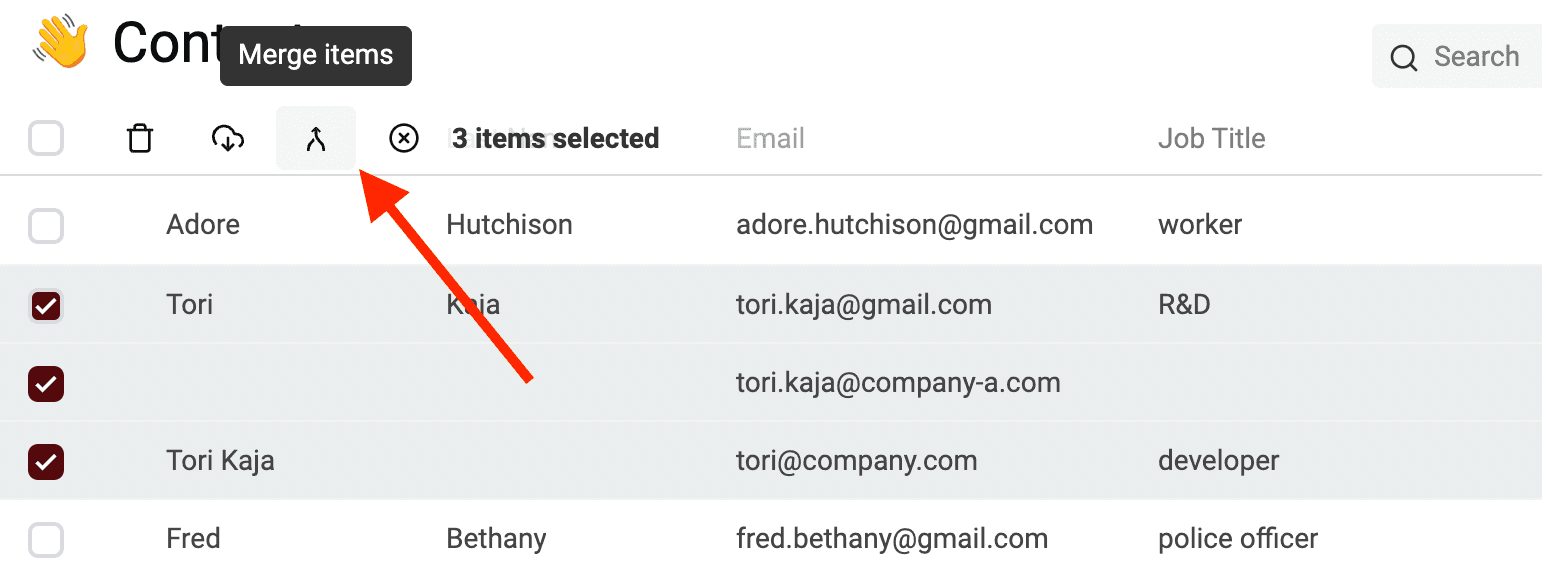
Choose the primary item and values
Datablist initially chooses the item with the most filled properties as the primary item. This is a starting point, not a rule for which record you must keep. Use Set as primary item on a secondary item if it has the identifier or history you need to preserve.
Empty primary-item properties can be filled from a secondary item. When values conflict, compare the sources and click the secondary value you want in the primary item. Check fields such as email, domain, owner, and phone number before confirming; a value from another person or company should not be combined just because a name matches.
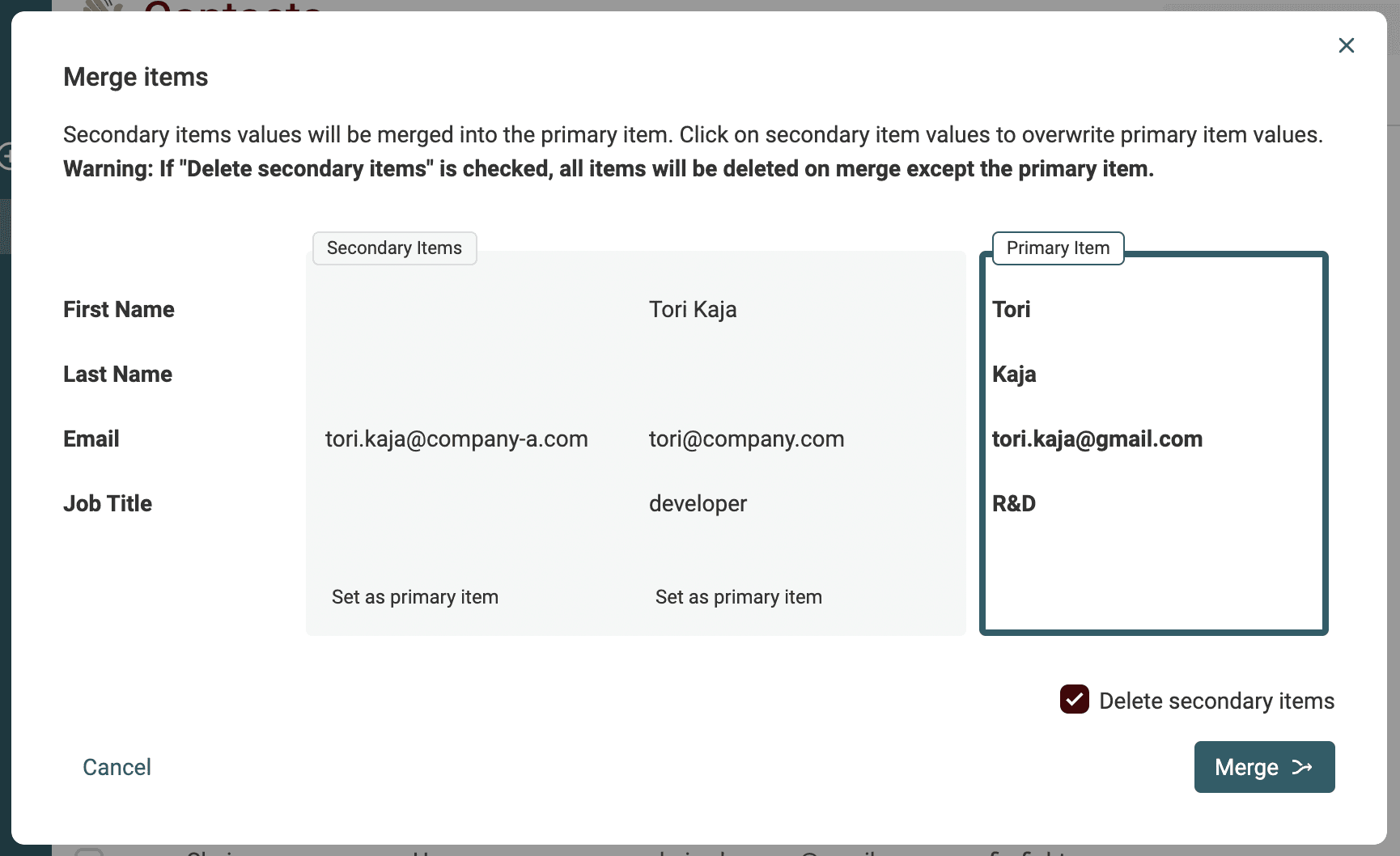
Decide what happens to the secondary items
Check Delete secondary items before clicking Merge. When this option is selected, Datablist updates the primary item and deletes the other selected items. Turn it off when you need to retain the source records. The assistant may turn deletion off when the selected items have conflicting property structures; confirm the setting rather than assuming it stayed the same.
For an important collection, export a copy before merging. Afterward, open the primary item and check its identifier, merged values, and remaining item count. If you merged the wrong records, consult Undo and Redo promptly; undo availability depends on the action and later changes.