To separate business email domains from generic providers in a CSV, run Datablist’s Free Email Validator on the email column and save its Business Email output. TRUE means the domain is not on the validator's generic-provider list; it does not prove that the address belongs to a particular company or person.
We’ve all seen personal email addresses like john.doe@gmail.com or sarah@yahoo.com. These are free, generic email providers, and people use them for everyday communication. Business emails, on the other hand, usually have a custom domain like info@companyname.com or jane@startup.com.
Use the result to segment contacts or decide which domains need manual review. A custom domain can belong to an individual, and a person can use a generic provider for work.
For stale company domains, a bulk parked-domain check can flag websites for review. Keep that result separate from the business-domain flag and from mailbox verification.
How to identify business email addresses from personal ones from a CSV file
Step 1: Import Your Email List
First, you’ll need to upload your email addresses to Datablist. You can either upload a CSV file or copy and paste the email list directly from a spreadsheet.
📘 The Free Email Validator checks format and domains. It does not confirm mailbox-level deliverability. If you need that check, use a dedicated email verification workflow.
Create a new collection in Datablist, click on the "+" button, and select "Import CSV/Excel". Datablist opens CSV files and Excel files.
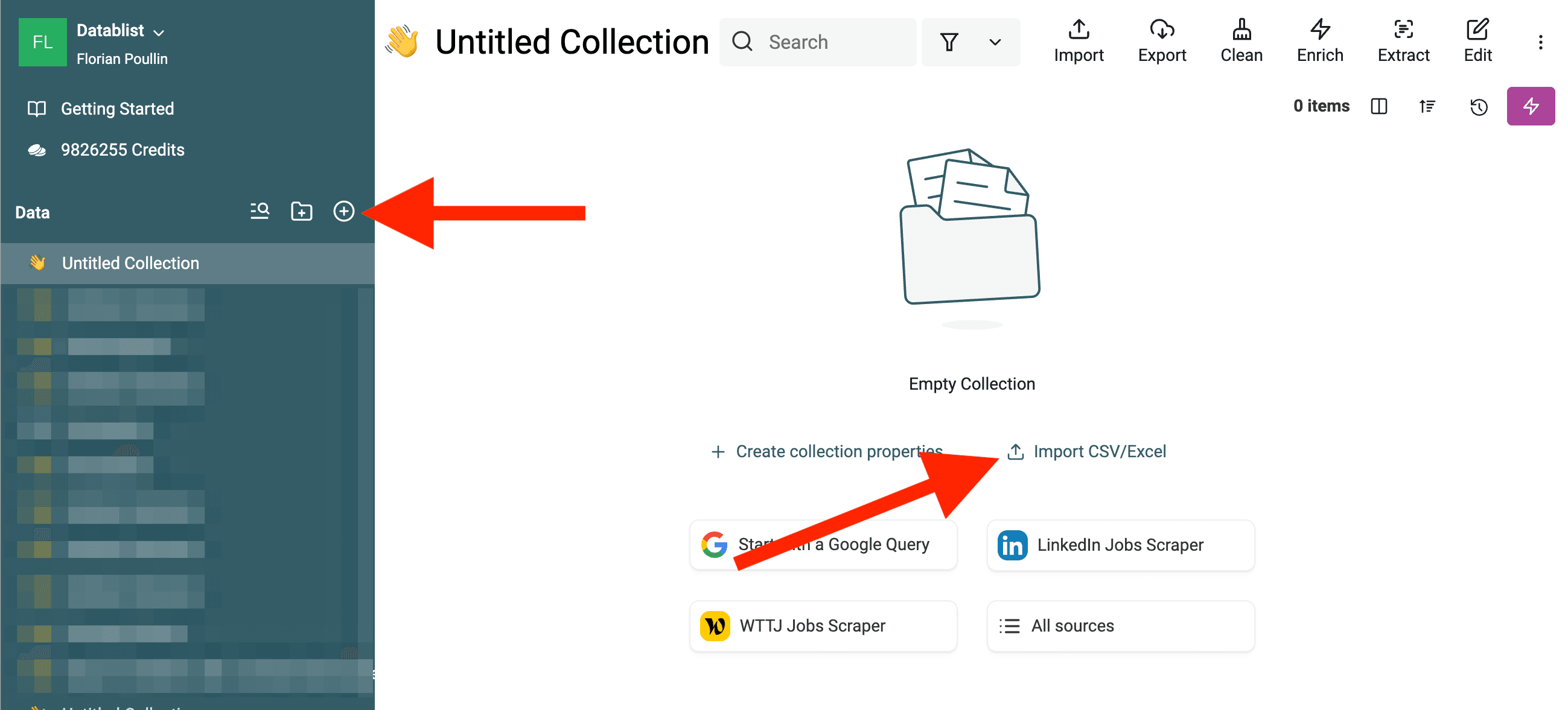
Step 2: Run the Free Email Validator Enrichment
Once your email list is uploaded, use the "Free Email Validator"(/enrichments/free-email-validator-bulk) to know if each email address belongs to a personal email provider or a business domain.
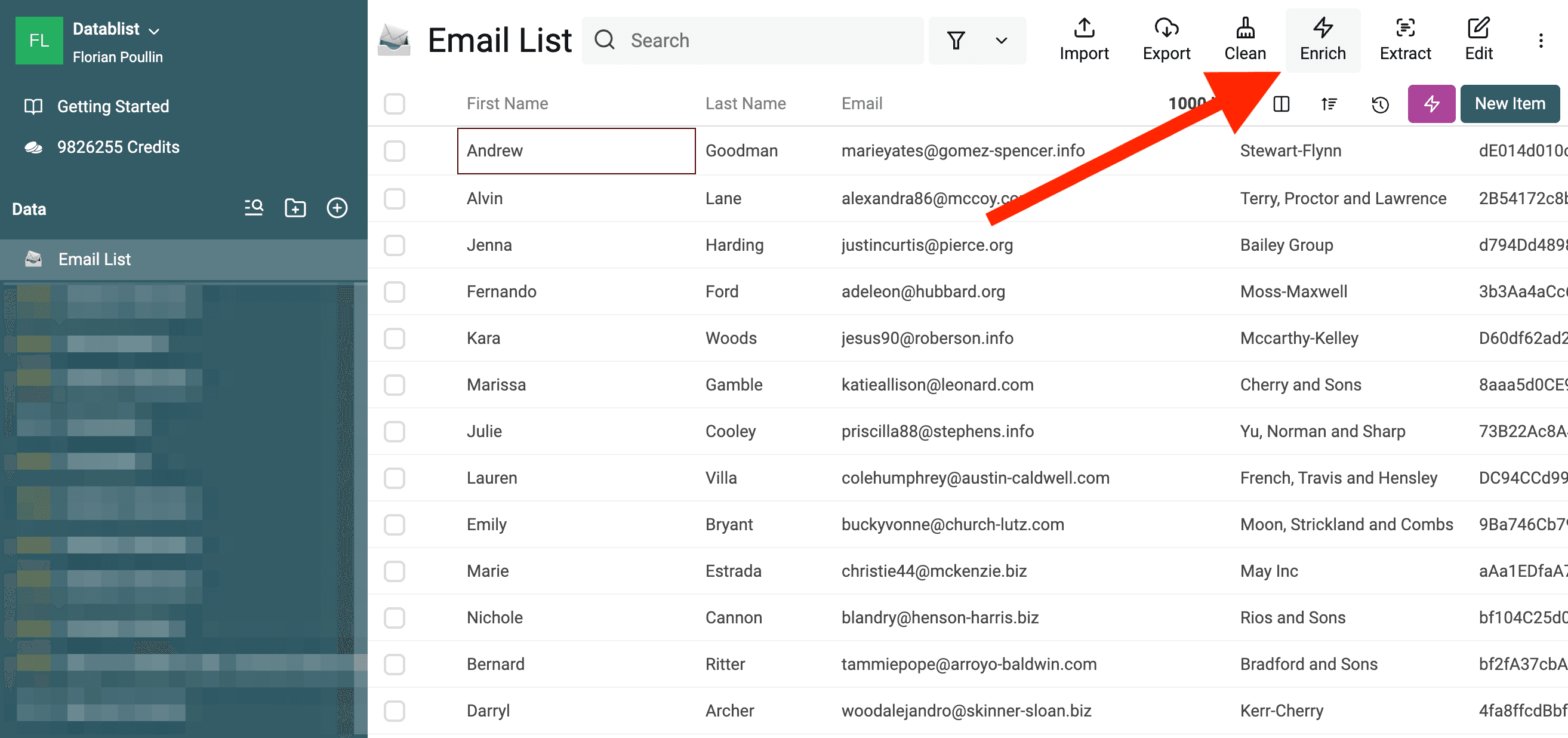
Click on the "Enrich" button in the header.
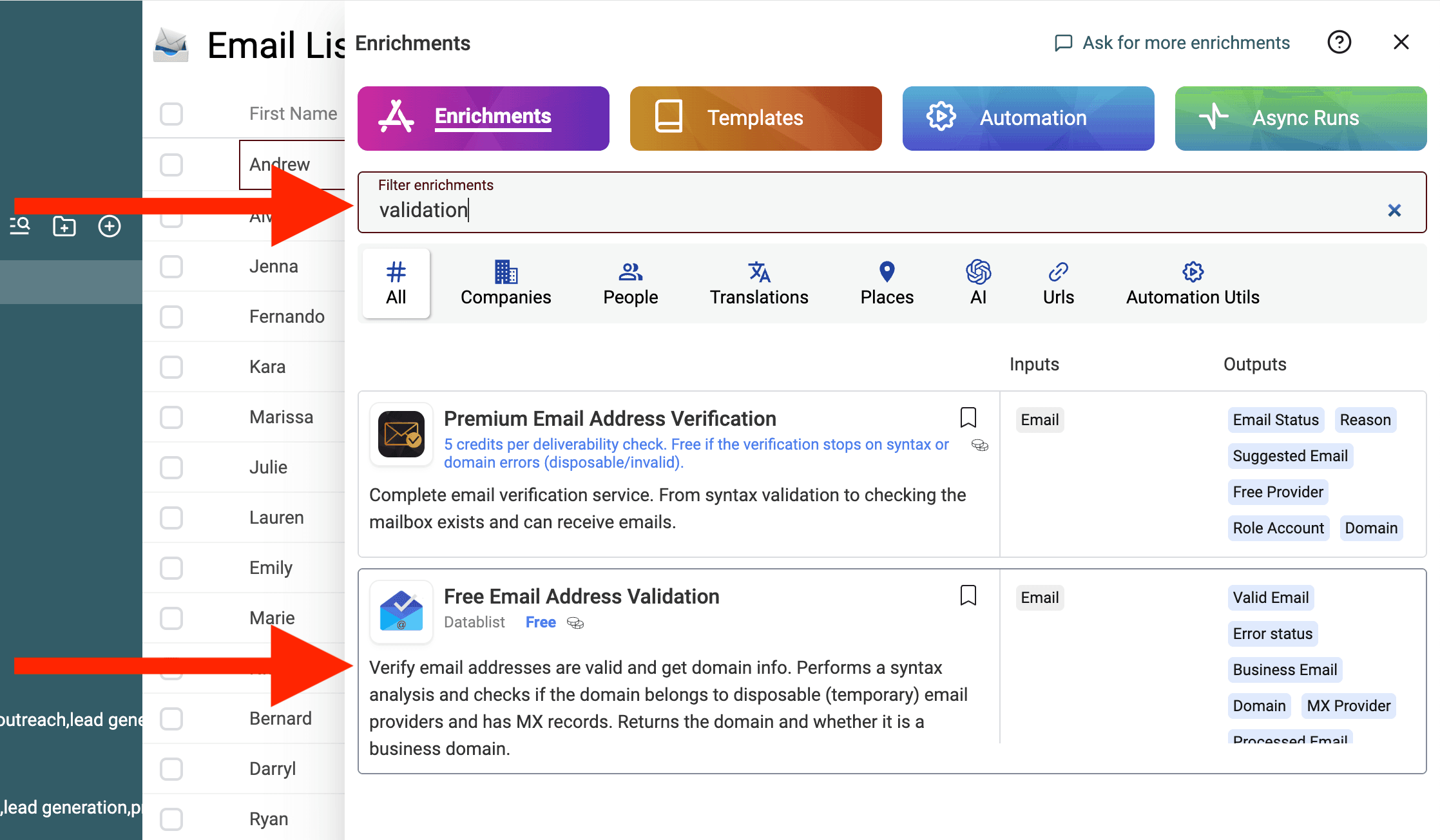
Then select "Free Email Validator".
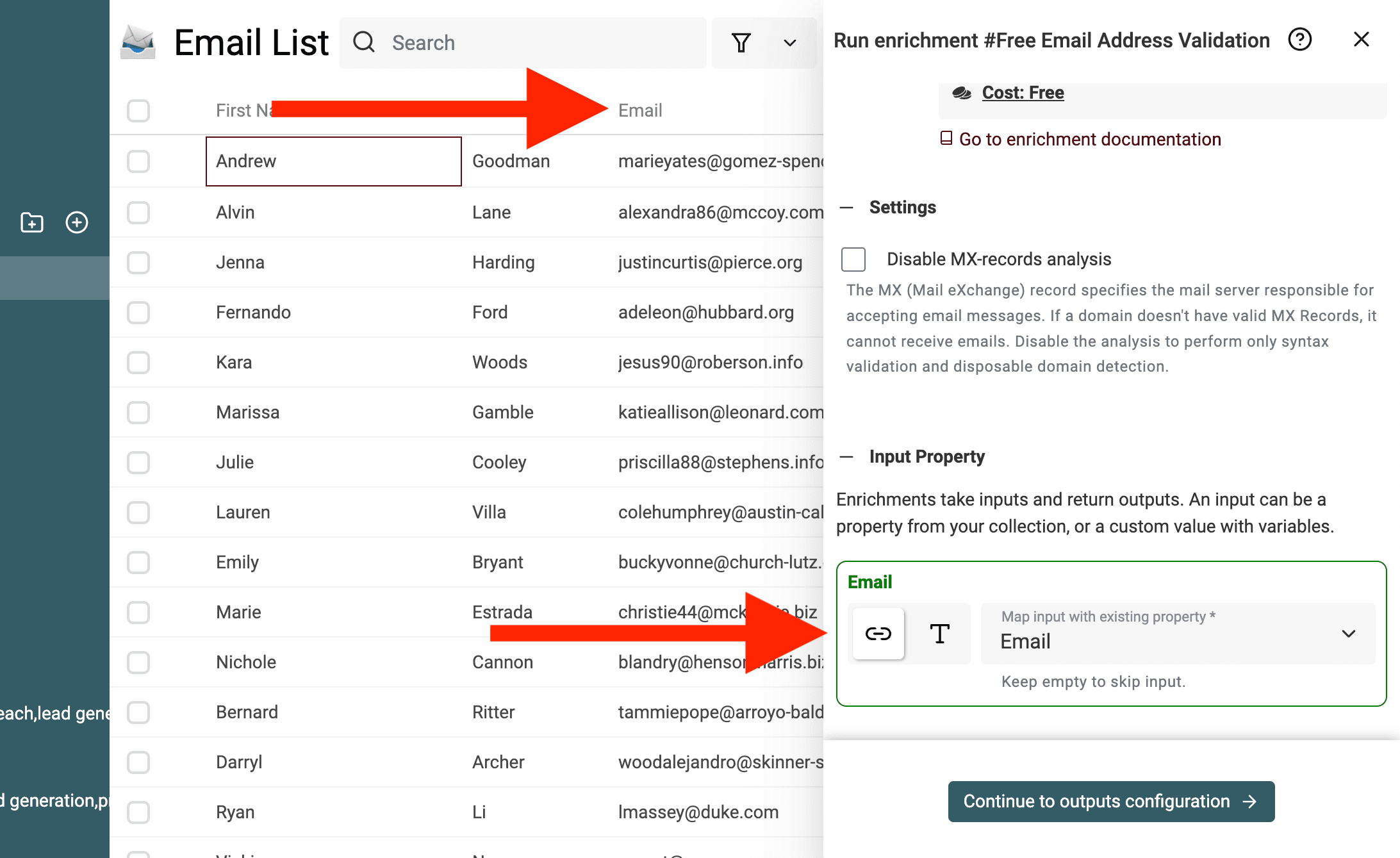
Choose the property containing the email addresses from your collection.
Map Business Email, Valid Email, and Error status to output columns. You can also save Domain and MX Provider if you need to inspect the address's domain and mail host separately.
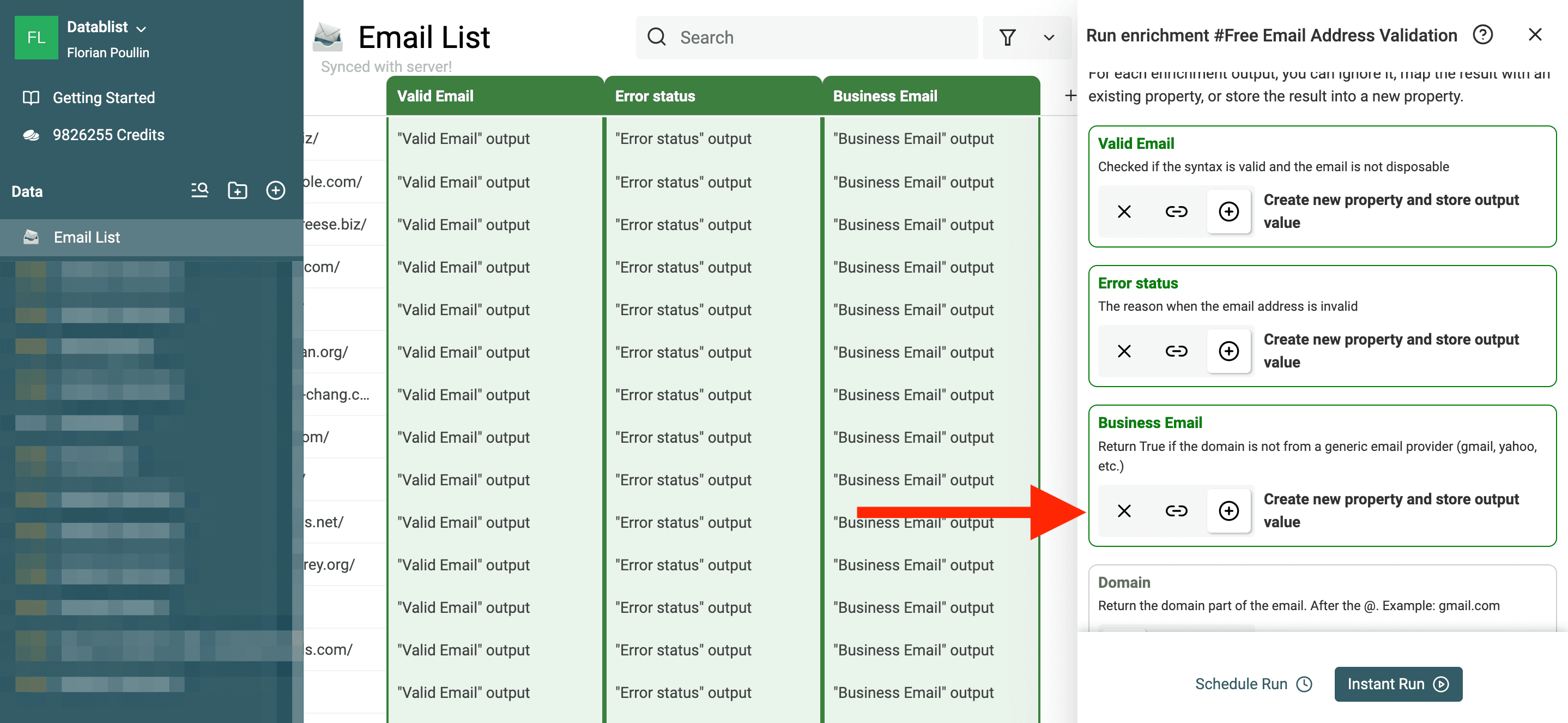
Step 3: Review the Results
Datablist processes the email list and returns the following:
- Valid Email - Checks format and disposable or blacklisted domains; by default it also checks the domain's DNS and MX records. It does not send a message to confirm that a mailbox exists.
- Error Status - The reason why the email address is invalid. Empty if valid.
- Business Email - Returns
TRUEwhen the domain is not recognized as a generic provider such as Gmail or Yahoo. An invalid address may have an empty value instead.
Examples of Business Email analysis
Here are some examples:
- john.doe@gmail.com will be tagged as a personal email
- info@companyname.com will be marked as a business email
- An address on a domain recognized as disposable will be marked invalid with an error status. Check the output rather than assuming every unfamiliar domain is disposable.
FAQ
Why should you care about checking if an email belongs to a company?
Understanding whether an email is personal or business can help you target your messages more effectively. For example, a personalized approach might be better for personal email users, while business addresses may require a more formal tone.
Is Datablist’s Free Email Validator really free?
The Free Email Validator does not use paid verification credits for its format and domain checks. Your workspace's import and processing limits still apply; check your plan before uploading a large list.
How does Datablist determine if an email is personal or business?
The validator compares the address's domain with a list of generic email providers. Separately, its default DNS check tests whether the domain has mail records and can identify the MX provider. A business can use Google's or Microsoft's mail servers on its own domain, so MX provider alone does not determine the Business Email value.
Can I use Datablist for large email lists?
Absolutely! Datablist is designed for bulk processing. Whether you have a few dozen or thousands of email addresses in a CSV file, Datablist can handle the list efficiently, providing results quickly.
What other information does the Free Email Validator provide?
It returns the domain, optional MX provider, validity flag, and error status as well as the business-domain flag. Validity checks do not confirm deliverability to an individual mailbox.
What file formats can I upload for validation?
You can upload email lists in CSV or Excel format. Just drag and drop your file into Datablist, and the platform will automatically process the data.
Can Datablist help me remove fake or temporary emails?
Yes! Datablist’s Free Email Validator flags emails from disposable services like @mailinator.com or @10minutemail.com. This helps you clean up your list and avoid contacting temporary or fake addresses.
How long does it take to validate a large list of emails?
Processing time depends on list size and whether you keep MX-record analysis enabled. Start with a small sample to confirm the output columns before processing the full list.